

Table of Contents
How to integrate STEAM in everyday learning?
Primary school might seem too early a place to start teaching kids about STEAM. But STEAM education helps students succeed in future academics.
What happens when learning science turns into a story, math becomes a puzzle, and art becomes a way to express ideas? The STEAM is an educational blend of Science, Technology, Engineering, Arts, and Mathematics into real-world, hands-on learning.
At OWIS India, we see STEAM that helps students to encourage curiosity, creativity, and problem-solving every single day. It’s a seamless integration that ensures students at our campuses, including IB schools in Whitefield, Bangalore, and IB schools in sarjapur develop true cross-disciplinary skills.
What is STEAM?
STEAM represents science, technology, engineering, arts, and mathematics. It fosters creativity, critical thinking, and problem-solving skills. Students are encouraged to explore ideas, design solutions, and apply their knowledge creatively. This method is essential for development in our rapidly evolving world. In contrast to traditional rote methods, STEAM education emphasises critical thinking, teamwork, and innovation. It equips students to address real-world issues while promoting collaboration, creativity, and continuous learning.Why is Integrating STEAM in Everyday Learning Essential?
- Encourage Creativity: Integrating arts and technology encourages creativity and problem-solving. It provides a balanced education that values both artistic expression and science.
- Empower Personal Growth: Education fosters achievement, resilience, curiosity, love for learning, and self-motivation in students.
- Promote Inclusivity: STEAM education fosters inclusivity and breaks barriers, encouraging participation from all students regardless of background or abilities.
- Boost Confidence: When students design, test, and improve their own ideas, they gain a sense of achievement.
- Promotes Collaboration: Students learn teamwork through projects and group explorations.
Integrating the STEAM Approach in the Classroom at OWIS
OWIS purposefully includes STEAM topics across its curriculum to create a lively and well-rounded learning experience.Interdisciplinary Project-Based Learning
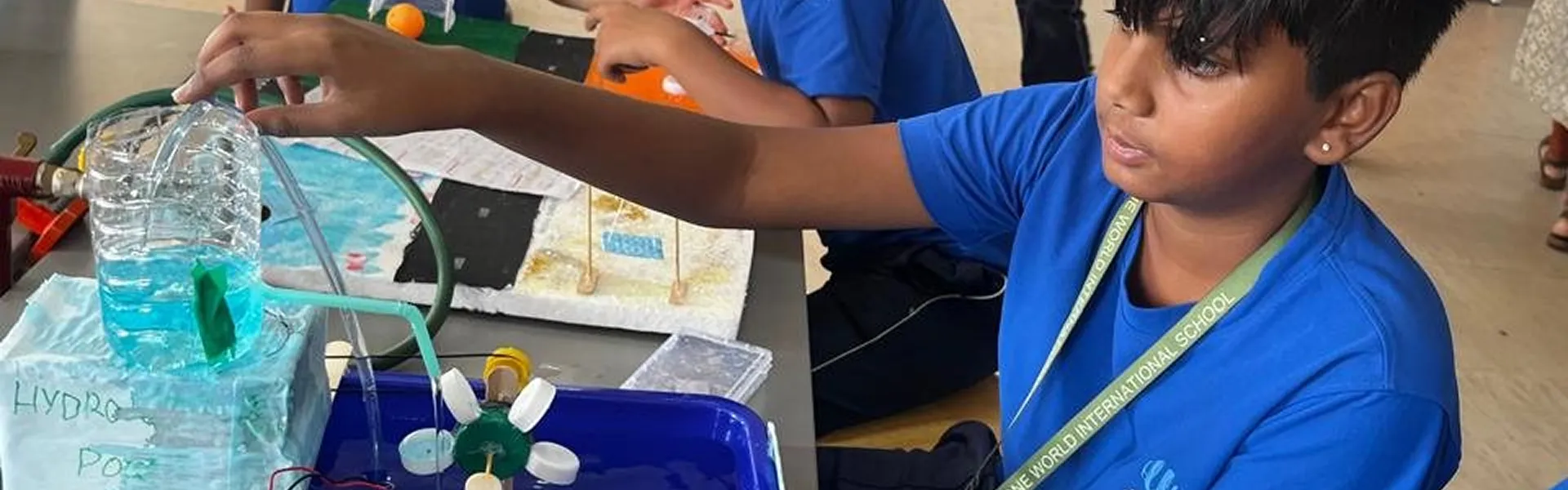
OWIS’s STEAM approach is centred around engaging project-based and inquiry-based learning, both of which are vital parts of its International Baccalaureate curriculum. For example, instead of explaining to students how plants grow, students learn to design their own mini-gardens, record growth patterns, and link findings to math measurements. This hands-on experience makes learning engaging and meaningful. Students can see how their knowledge applies in real situations.Technology Integration
At OWIS, we use technology to create a lively and immersive learning environment. From digital classrooms to apps and online platforms, the school provides students with interactive tools. Technology supports the curriculum by using programming languages to create digital art or build robots. The modern facilities encourage hands-on learning. They allow students to experiment and build.Play-Based Learning in Early Years
During early childhood, we introduce children to STEAM (Science, Technology, Engineering, Arts, and Mathematics) through play-based and exploratory activities. Our classrooms are vibrant, inclusive, and foster curiosity, creativity, and enjoyment in learning. Kids love activities like building towers with blocks, mixing colours to see what new shades they can create, and crafting stories from their imaginations. These activities naturally incorporate STEAM ideas in a fun, effortless way. Our classrooms are lively and welcoming, featuring cosy reading nooks, fun science stations, and special areas for arts and creativity. The layout encourages kids to explore actively with both their hands and minds, helping them dive deep into their learning and develop a natural curiosity that lasts.Vibrant Learning Spaces
The learning environment at OWIS is designed to stimulate young minds. With the engaging classrooms feature interactive science stations, cosy reading nooks, and spaces for creative arts, it makes the learning experience engaging and connecting.How Parents Can Support STEAM Learning at Home
STEAM doesn’t stop at School, parents can nurture it at home through:- Fostering a Curious Mindset – Encourage children to ask questions and instead of just providing an answer, make it a joint develop project. Let them learn from their mistakes and praise their efforts over the result that helps them growth.
- Curate Technology Mindfully – Use educational apps and websites that promote coding, design, and problem-solving. Limit passive screen time and actively participate in digital activities with your children to maximise the learning experience.
- Natural Walk Science – Collect and classify natural items like leaves and rocks, discussing why certain things float or sink in water.
- Involve them in Family Chores – Let them sort laundry by colour or size, teach patterns and counting. Moreover, turning household activities into mini science experiments builds curiosity and creativity.
- Stay Connected with Teachers – Attend parent-teacher meetings and keep up with what your child is learning at school. Also, ask for recommendations on projects or tools that align with the school’s curriculum.