

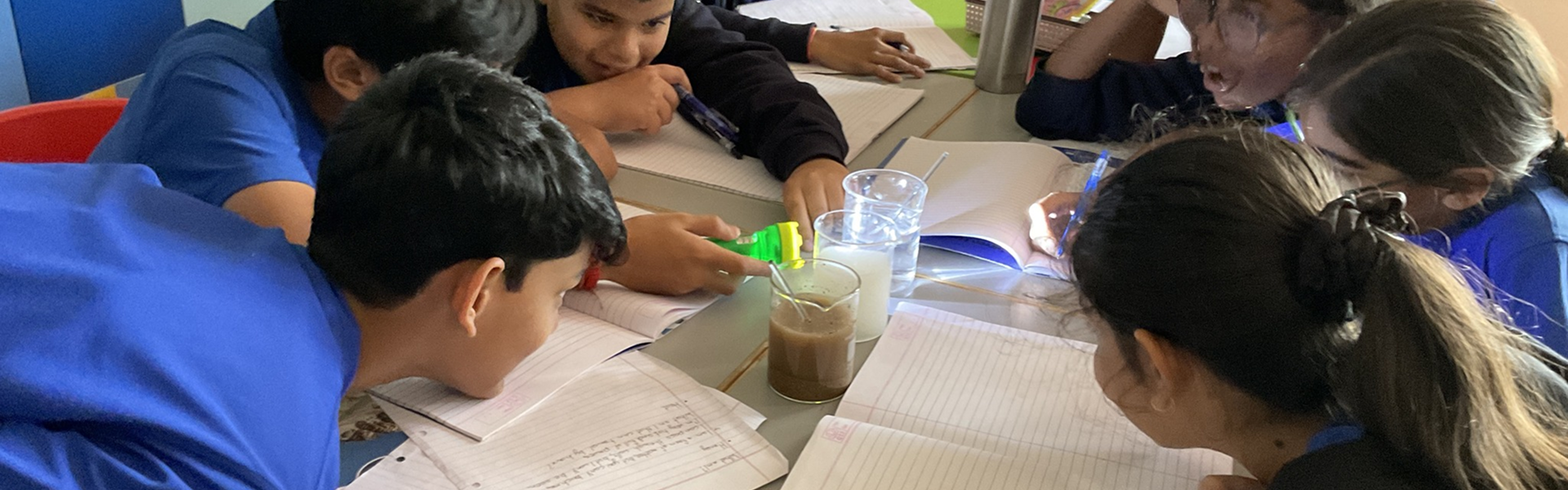
How to Teach Physics Through Water-Based Experiments
Physics must be the second-most-hated subject after math. I remember I was in sixth grade when we were first introduced to Physics. No matter how good the teachers were, I couldn’t fathom the concepts. Most of the time, it required envisioning, and I was awful at it. It was also the period when science experiments were limited only to practical lab sessions. During those 45 minutes, we were required to conduct water-based experiments, derive results, record them in our notebooks, and have them duly signed by the teacher.
And we couldn’t even perform the experiments without a 50% margin of error. Reflecting on all those times, I genuinely wish we had better pedagogy. But things are different now. The International Baccalaureate Schools in Bangalore adopt an experiential learning curriculum that brings out the best in every student. Learning through fun activities begins in early childhood education, so students don’t feel overwhelmed when transitioning to higher grades.
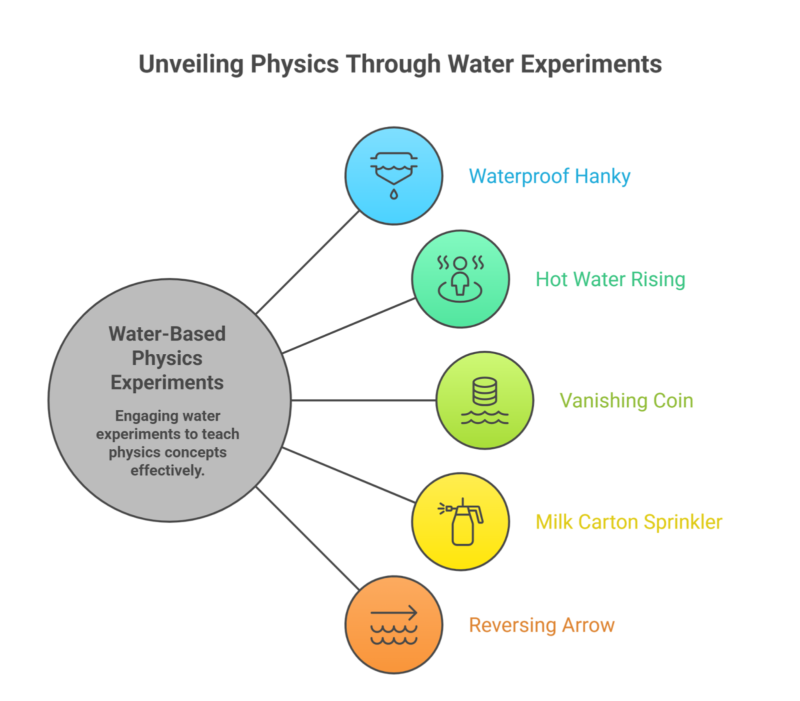
Science Experiments with Water to Teach Physics
You don’t need an elaborate lab setting or high-end equipment to teach physics using water-based experiments.
1. Waterproof Hanky
Things Needed:
- A glass or transparent plastic cup
- A plate with raised edges
- Water
- A handkerchief made of any cloth material
Procedure:
- Push the center of the handkerchief into the glass with the edges hanging over the rim.
- Pour water through the loose handkerchief until the glass is half full.
- Pull the corners tight over the glass opening, place the plate on top, and carefully flip the entire setup upside down.
- Hold the glass vertically above and remove the plate. You’ll see the water stays inside!
Concept:
It demonstrates how surface tension, air pressure, and gravity interact with each other. The handkerchief’s tiny woven holes create strong surface tension that, combined with upward air pressure, balances gravity’s downward pull. Without the fabric, the opening is too large for surface tension to hold the water in place.

2. Hot Water Rising
Things Needed:
- Four identical clear bottles
- Hot water (from tap, not boiling)
- Cold water
- Two different food colorings
- Thin card pieces
Procedure:
- Add different food coloring to hot and cold water.
- Fill two bottles with cold water and two with hot water.
- Place a card over one cold water bottle, flip it upside down, and balance it on top of a hot water bottle.
- Do the same with a hot water bottle on top of a cold one.
- Carefully remove both cards simultaneously and observe the results.
Concept:
It demonstrates density, convection, and molecular movement. Hot water is less dense than cold water because heat causes its molecules to move faster and spread farther apart. In one setup, cold water sinks while hot water rises, creating mixing through convection. In the other, stable layers form because the denser cold water is already at the bottom.
3. Vanishing Coin
Things Needed:
- A straight-sided glass
- Small jar or ramekin (with concave bottom)
- A coin
- Water
- A lid to cover the glass
Procedure:
- Place the jar upside down with the coin on top.
- Position the glass over it so students can see the coin from the side.
- Fill the glass with water in one pour and cover with the lid.
- The coin disappears when viewed from the side but remains visible from above.
Concept:
It shows total internal reflection and refraction. Light from the coin travels through multiple materials (air, glass, water). When water fills the glass, it changes the light’s angle enough that 100% of the light reflects instead of escaping through the glass sides, making the coin invisible from the side view.
4. Milk Carton Sprinkler
Things Needed:
- Empty juice carton or plastic milk bottle
- String
- Scissors
- Water
- Bowl
Procedure:
- Poke holes in the bottom corner of each side of the carton (consistently left or right corners).
- Make another hole in the top flap and thread the string through it, tying a knot to secure it in place.
- Fill a bowl with water, stand the carton in it, then fill the carton with water.
- Lift the carton by the string and watch it spin as water sprays out.
Concept:
It demonstrates pressure, momentum (turning forces), and states of matter. Water pressure at the bottom forces liquid out through the holes. Since holes are off-center, the outward water force creates an unbalanced moment that spins the carton. The experiment also demonstrates how liquid molecules can flow freely, unlike solid ice molecules, which remain fixed together.
5. Reversing Arrow
Things Needed:
- A straight-sided glass or jar
- Paper and marker pen
- Water
Procedure:
- Draw two horizontal arrows pointing in the same direction on paper and prop it up.
- Position the glass in front of the arrows and slowly pour water until it covers the bottom arrow but not the top one.
- Adjust the glass distance until the bottom arrow appears reversed and the same size as the top arrow.
Concept: The experiment demonstrates refraction – the bending of light as it passes through different materials. Light rays change direction when entering and leaving the curved surface of water, causing them to intersect with each other. The process makes the arrow appear to point in the opposite direction, creating an optical illusion similar to how swimming pools look shallower than they are.
Conclusion
These water-based experiments effectively explain abstract physics concepts in a tangible and understandable manner. Students at the best schools in Bangalore benefit from hands-on approaches that make cause-and-effect relationships directly observable. Such experiential learning builds confidence and curiosity, making physics accessible and enjoyable for all learners.