

Have you wondered about India’s geographical diversity? Known for vibrant cultures and ancient history, India is also home to some of the most beautiful landscapes. From mountains to beaches and cities to suburbs, the diversity is breathtaking. Understanding the various states of India and their capitals is the key to gaining an in-depth awareness of the nation.
The capitals of Indian states are also an important part of the and curriculum. This particular topic educates students about the administration of each state and what makes them special. In this blog, we will cover this topic to offer valuable insights into the International Baccalaureate courses States, Union Territories, and their capitals.
How Many States and Union Territories are in India?
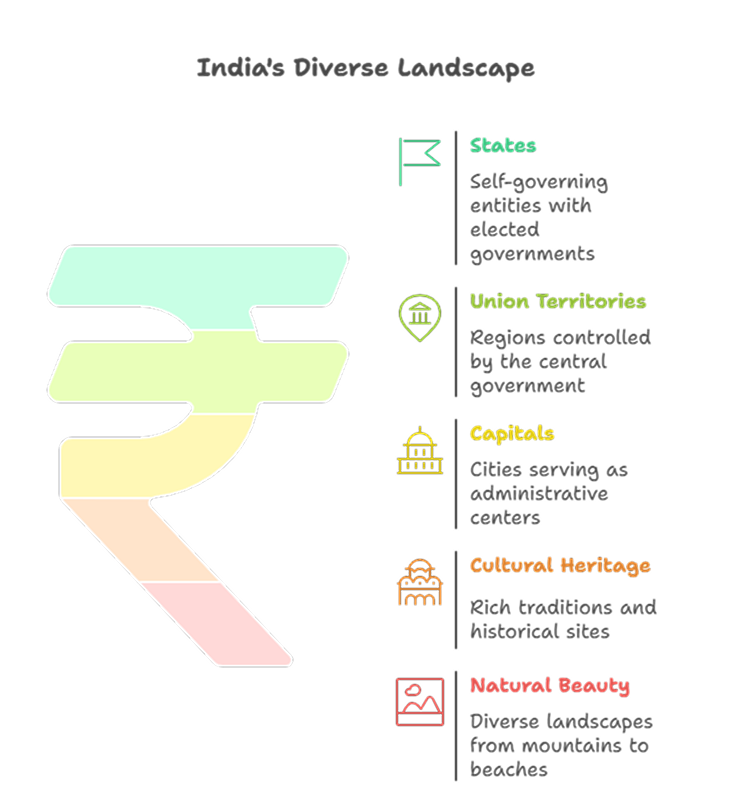
As part of the IB International Baccalaureate curriculum, it is important for students to know about India’s political and cultural landscape. India is a federal parliamentary republic comprised of two types of major entities – States and Union Territories (UTs). There are 28 States and 8 Union Territories in India. The division is mainly due to administrative reasons and to meet the diverse needs of specific regions.
States are self-governing entities with their own elected governments. They are responsible for administration within defined geographical boundaries and exercise autonomy in making decisions regarding matters of health, law, education, etc. The highest office in a State is held by the Chief Minister. On the other hand, Union Territories refer to the regions whose administration is controlled by the central government of India. UTs have less autonomy than states and are looked after by the Lieutenant Governor or Administrator appointed by the President of India.
Each State and UT has its capital that acts as the centre from which power is dispersed into other parts. So, without further ado, let’s get into the Capitals of the Indian States and Union Territories!
What Makes India a Land of Geographic Diversity?
Have you wondered about India’s geographical diversity? Known for vibrant cultures and ancient history, India is also home to some of the most beautiful landscapes. From mountains to beaches and cities to suburbs, the diversity is breathtaking. Understanding the various states of India and their capitals is the key to gaining an in-depth awareness of the nation. The capitals of Indian states are also an important part of the and curriculum. This particular topic educates students about the administration of each state and what makes them special. In this blog, we will cover this topic to offer valuable insights into the International Baccalaureate courses States, Union Territories, and their capitals
What Are the Capitals of Indian States?
The capital of the state is the town designated as the seat of state government, which is decided by the Constitution of India. The capital state is the one where all the state’s administrative offices, legislative building, and judicial headquarters are located. Let us look at the capitals of 28 states of India along with their highlights in the table below.
| State | Capital | Highlights |
| Andhra Pradesh | Amravati | Beautiful beaches, ancient temples, and a rich cultural heritage. |
| Arunachal Pradesh | Itanagar | Green hills, snow-capped mountains, and rich tribal culture. Home to many Buddhist monasteries. |
| Assam | Dispur | Scenic beauty, rich culture, and the Brahmaputra River. |
| Bihar | Patna | Historically significant for Buddhism and Jainism. Ancient ruins, pilgrimage sites, and the sacred river Ganges. |
| Chhattisgarh | Raipur | Tribal communities, lush forests, caves, waterfalls, and industrial development. |
| Goa | Panaji | Stunning beaches, Portuguese architecture, and vibrant atmosphere. |
| Gujarat | Gandhinagar | Industry hub with rich trade history. Home to the Statue of Unity. |
| Haryana | Chandigarh (Also a Union Territory) | Modern planned city known for urban planning, parks, and proximity to Delhi. |
| Himachal Pradesh | Shimla | Snow-capped mountains, adventure tourism, and colonial-era architecture. |
| Jharkhand | Ranchi | Rich mineral resources, forests, waterfalls, and tribal communities. |
| Karnataka | Bangalore | India’s IT hub, known for tech industry, gardens, historical sites, and vibrant culture. |
| Kerala | Thiruvananthapuram | “God’s Own Country,” famous for backwaters, beaches, Ayurveda, and lush greenery. |
| Madhya Pradesh | Bhopal | Historical cities, wildlife, ancient temples, national parks, and Sanchi Stupa. |
| Maharashtra | Mumbai | India’s financial and entertainment capital, home to Bollywood and historic landmarks. |
| Manipur | Imphal | Scenic beauty and Loktak Lake. |
| Meghalaya | Shillong | Rolling hills, waterfalls, and “Abode of the Clouds.” |
| Mizoram | Aizawl | Lush hills, bamboo forests, and vibrant tribal culture. |
| Nagaland | Kohima | Hornbill Festival, traditional handicrafts, and scenic beauty. |
| Odisha | Bhubaneswar | Ancient temples including Jagannath Temple and coastal beauty. |
| Punjab | Chandigarh (Also a Union Territory) | Fertile lands, Sikh culture, agriculture, and Golden Temple. |
| Rajasthan | Jaipur | “The Pink City,” historical forts, palaces, vibrant markets, and deserts. |
| Sikkim | Gangtok | Himalayan landscapes, monasteries, and adventure tourism. |
| Tamil Nadu | Chennai | Ancient temples, music, dance, cultural heritage, and IT growth. |
| Telangana | Hyderabad | Rich history, major IT hub, and home to Charminar. |
| Tripura | Agartala | Scenic beauty, tribal culture, and Ujjayanta Palace. |
| Uttar Pradesh | Lucknow | Mughal architecture and Nawabi culture. |
| Uttarakhand | Dehradun | Scenic beauty, pilgrimage sites, and adventure tourism. |
| West Bengal | Kolkata | Rich culture, literature, art, and iconic Howrah Bridge. |
Union Territories and Their Capitals
The Union Territories are a topic of interest for many due to their special status in the Indian Constitution. They are strategic and political lands with rich culture and history. Let’s explore the 8 Union Territories and their capitals below.
| Union Territory | Capital | Highlights |
| Andaman and Nicobar Islands | Port Blair | Known for beautiful beaches, coral reefs, and the Cellular Jail. Popular for adventure tourism. |
| Chandigarh | Chandigarh (Shared with Punjab & Haryana) | First planned city of India. Popular for parks, malls, and modern architecture. Home to the famous Rock Garden. |
| Dadra and Nagar Haveli and Daman and Diu | Daman | Combination of former territories, known for beaches, historic forts, and Portuguese influence. |
| Delhi | New Delhi | National Capital Territory known for historical monuments, government buildings, diverse culture, and vibrant city life. |
| Jammu and Kashmir | Srinagar (Summer) / Jammu (Winter) | Known for stunning natural beauty, valleys, and religious sites. |
| Ladakh | Leh | High-altitude desert, breathtaking landscapes, monasteries, and adventure tourism. |
| Lakshadweep | Kavaratti | Coral islands, beaches, water sports, and a relaxed atmosphere. |
| Puducherry | Puducherry | French colonial heritage, serene beaches, and a peaceful, unique cultural atmosphere. |
To Sum Up
Indian States and Union Territories are extremely fascinating. Their capitals, more so, as they hold the most cultural and administrative significance. The capital of Indian States and Union Territories is not only important for General Knowledge but also to understand our nation better.
OWIS, one of the top International Baccalaureate Schools in Bangalore, enables students to study and learn all the important facts about the nation and life. We encourage students to explore different types of knowledge and push them to their full potential. To know more about our pedagogy, get in touch with us now!