

Key Takeaways
- Self-discovery in children is a gradual process built through everyday choices, curiosity and small failures, rather than a single defining moment
- With India home to 253 million adolescents aged 10 to 19, every child’s journey is different and success cannot be measured by marks alone
- India’s NEP 2020 promotes holistic, multidisciplinary learning that develops social, physical, intellectual and emotional capacities together
- Simple home habits, open-ended questions, unstructured play and praising effort over outcomes can help nurture a child’s natural interests
- The right school extends this nurturing environment through teachers who recognise individual strengths and a curriculum built around inquiry rather than rote learning
- OWIS places the IB Learner Profile at the centre of its classrooms, helping children develop as inquirers, thinkers and reflective individuals, not just high scorers
Supporting Children as They Discover Who They Can Become
Give a child five spare minutes, and you will see their true potential. It’s highly likely that you’ll find yourself stripping drawings off a wall, putting back together a toy, cleaning bugs from a drawer, and a barrage of questions waiting after you are done with them all. Children are, in many ways, a bundle of curiosity. Every dismantled toy and quirky pocket is a small step toward figuring out who they are, and as a parent, you play an impactful role in that journey.
What Does It Really Mean for a Child to Discover Who They Are?
Every child is born with a distinct set of interests, strengths and ways of seeing the world. Discovering who they are is not a single moment of realisation; it is a slow, ongoing process built from everyday experiences.
- Trying new activities and noticing what excites them
- Making small choices and living with the outcomes
- Being allowed to fail and try again
- Feeling seen and heard by the adults around them
This is no small task at scale. UNICEF India notes the country is home to the largest adolescent population in the world, with 253 million young people aged 10 to 19, each one on a different path of self-discovery.
Why Does Every Child’s Path to Student Success Look Different?
For a long time, student success was measured almost entirely through marks and rank lists. This narrow view often overlooks a child’s real strengths, whether that is storytelling, building things, asking sharp questions, or being kind to a classmate having a hard day. India’s National Education Policy 2020, published by the Ministry of Education, calls for a shift toward holistic and multidisciplinary learning that develops a child’s social, physical, intellectual and emotional capacities together, not academics alone.
How Can You Nurture Your Child’s Curiosity at Home?
Small, everyday habits at home can help your child explore who they are.
- Ask open-ended questions instead of yes or no ones
- Let them choose an activity without steering the outcome
- Give unstructured time for imaginative, screen-free play
- Praise the effort and process, not just the result
- Treat mistakes as part of learning, not something to fear
Ways to Notice and Nurture Your Child’s Interests
| What You Notice | How You Can Nurture It |
| Loves stories and words | Read together and encourage journaling |
| Builds and takes things apart | Offer construction sets and simple repairs |
| Asks endless questions | Explore answers together instead of rushing them |
| Enjoys music or movement | Introduce an instrument or a dance form |
| Prefers quiet, solo play | Respect their pace and offer creative solo tasks |
What Should You Look for in a School That Focuses on Nurturing Young Minds?
The right school can extend at home what a child is already exploring. When you are shortlisting good IB schools in Bangalore, look for teachers who notice individual strengths, classrooms that leave room for questions, and a culture that treats every child’s interests as worth exploring.
A school genuinely invested in nurturing young minds will talk about your child’s growth in more than just grades, covering confidence, curiosity and character as well.
Which Curriculum Supports a Child’s Individual Growth?
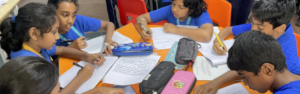
The curriculum matters as much as the classroom. Programmes built around IB subjects are designed around inquiry rather than rote instruction, encouraging children to ask questions, make connections and pursue what genuinely interests them while still building strong academic foundations.
How Does OWIS Help Children Discover Who They Can Become?
Among IB schools in Bangalore, India, One World International School places the IB Learner Profile at the centre of its classrooms, encouraging children to be inquirers, thinkers and reflective individuals rather than simply high scorers.
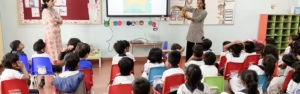
The mission at OWIS is to nurture curious, kind and thoughtful individuals through collaborative, enquiry-based learning, with specialised educators giving equal attention to academic growth and personal character. Every child is encouraged to explore, ask questions and grow into their own version of success.
Wrapping Up
Every child’s journey to discovering who they are is different, shaped by curiosity, small choices, and the freedom to try, fail and try again. As a parent, the small habits you build at home lay the foundation.But that discovery deepens when it’s mirrored in the classroom. At One World International School, this is exactly the approach; an IB Learner Profile-led classroom where every child is encouraged to explore, question, and grow into their own version of success. If you’re exploring IB schools in Bangalore for your child, reach out to OWIS to see this philosophy in action.
FAQs
Expose them to a variety of activities, observe what they return to on their own, and give them room to explore those interests without pressure.
This is completely normal in early childhood. Changing interests are part of exploration, not a lack of focus, and often settle with age.
Yes, academics remain important, but they are viewed alongside creativity, character and critical thinking rather than in isolation.
The IB curriculum uses inquiry-based, transdisciplinary learning that lets children explore concepts through their own questions and interests.
From the early years, since young children are already showing clear preferences and strengths through everyday play.