

What if measuring was not just about rulers and formulae, but about baking a cake, designing a room, or planning a school event?
In today’s classrooms, students don’t just want to learn; they want to experience. That is exactly where experiential learning steps in. It transforms abstract concepts like measurement into something real, relatable and honestly way more fun.
At leading international schools in Bangalore, India, this shift is already happening. And at OWIS, it’s not a trend; it is a way of learning.
What Is Experiential Learning and Why Does It Matter?
Experiential learning is learning by doing. Instead of memorising formulas, students apply them in real-life situations. Here’s how it changes the game:
- Concepts become easier to understand
- Learning feels relevant and practical
- Students retain information longer
- Confidence builds naturally
When learning feels real, then the results follow.
Why Does Measurement Feel Difficult in Traditional Classrooms?
Measurement can feel dry when it is just numbers on a page. Here is where traditional methods fall short:
| Traditional Approach | What Students Experience |
|---|---|
| Formula-heavy teaching | Confusion without context |
| Limited real-life connection | “When will I use this?” mindset |
| Passive Learning | Low Engagement |
How Does Hands-On Learning Bring Measurement to Life?
Now imagine this instead:
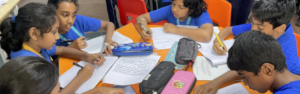
- Measuring ingredients while baking
- Calculating area while designing a classroom layout
- Estimating distance during a sports activity
That is hands-on learning in action.
Here is what changes –
- Students see how measurement works
- Mistakes become learning moments
- Curiosity replaces fear and stress
Studies indicate that experiential and activity-based learning can significantly enhance conceptual understanding; 92% of students report improved clarity when learning through hands-on methods.
Where Does the IB PYP Curriculum Fit Into This?
The IB PYP curriculum (Primary Years Programme) is built around inquiry and real world connections. It doesn’t treat subjects as separate silos; it blends them into meaningful experiences.
How PYP Approaches Measurement:
- Learning through projects and real-life scenarios
- Integrating maths with science, art, and daily activities
- Encouraging students to ask “why” and “how”
It is not just about getting the right answer; it is about understanding the process.
Why Are Parents Choosing Experiential Learning Today?
Students today need more than textbook knowledge. They need:
- Problem-solving skills
- Critical thinking
- Real world application
And honestly, they need to enjoy learning. That is why more families are exploring international schools that offer this approach.
When Do Students Benefit the Most From This Approach?
Early exposure makes all the difference for students.
- Primary Years- Build curiosity and foundational understanding
- Middle Years- Apply concepts through projects
- Senior Years- Use knowledge in real-world scenarios
The earlier students experience hands-on learning, the stronger their confidence grows.
How Does OWIS Make Measurement Meaningful?
Among the many good IB schools in Bangalore, OWIS stands out for one simple reason: it gets the balance right. At OWIS, experiential learning is not an add-on; it’s built into everyday teaching. How OWIS Brings Measurement to Life:
- Real World Projects: Students measure ingredients in cooking activities, plan layouts and even manage mini-project budgets.
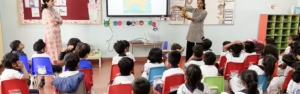
- Inquiry Based Classrooms: Teachers encourage questions like:
“Why does this measurement matter?”
“How can we use it in real life?”
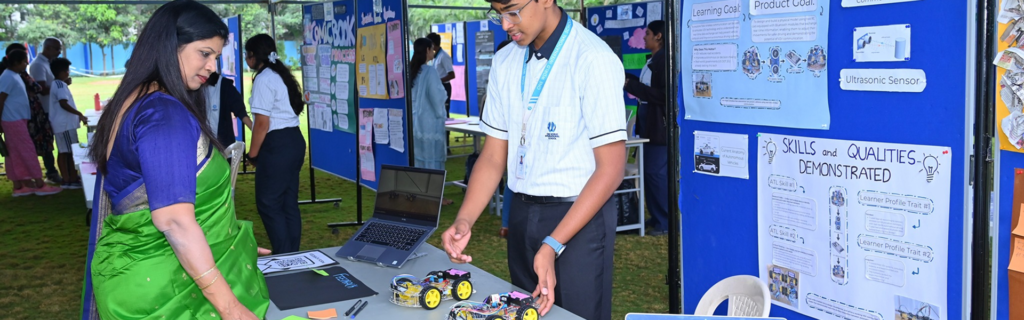
- Cross-Disciplinary Learning: Measurement is not limited to maths – it connects with science experiments, art projects, and even sports.
- Personalised Learning Approach: Every child learns differently. OWIS ensures each student engages with concepts at their own pace.
- Safe, Global Learning Environment: With a strong IB foundation, students gain both conceptual clarity and global exposure.
This helps students to not just learn measurement but to apply it in real life. It’s not just about education. It’s about building confident, capable learners.
What is the Real Takeaway?
Learning does not have to feel like a chore. When students experience what they learn, everything changes. Concepts click faster, confidence grows stronger and curiosity takes the lead.
That’s exactly what OWIS delivers – education that connects the classroom to the real world. It’s not just about measuring numbers. It’s about measuring potential and helping every child realise it.
FAQs
Experiential learning means learning by doing. Students understand concepts through real life activities instead of just reading or memorising; making learning more practical and engaging.
Hands-on learning allows students to apply measurement in real situations like cooking or projects. This makes concepts clearer, meaningful and easier to remember and implement.
The IB PYP curriculum focuses on inquiry and real world learning. It helps students connect concepts across subjects and develop a deeper understanding rather than rote memorisation.
Yes, many international schools in Bangalore, India, are shifting towards experiential models to improve engagement, critical thinking and real-world application skills.
OWIS combines experiential learning, strong IB programmes, and a nurturing environment. It ensures students are not only academically strong but also confident, curious and future-ready.