


Learning has transcended beyond the normal. It is no longer about getting good grades or gaining expert bookish knowledge. Now is an era in which even college degrees seem redundant unless they offer unique value.
So, why should schooling be any different? Everyone, even those at the grassroots level, has access to some form of education thanks to the internet. But how effective are they, and how far as parents are we willing to go to get the best for our children?
Because from where we stand, knowledge acquisition isn’t the problem. The question is how that knowledge serves the emotional well-being and social empathy of our children.
What is the IB Board in India
What curriculum offers the best of all, if not the IB Board in India? Introduced in India in 1976, the IB (International Baccalaureate) programme has gained momentum due to its strong emphasis on inquiry-based learning.
It is an education framework developed by the IBO (International Baccalaureate Organisation) to address the UN’s Sustainable Development Goals and mould individuals into globally responsible, ethically valued, and culturally respectable adults.
The curriculum integrates critical thinking, intercultural understanding, and personal development into the teaching pedagogy to instil international mindedness in students.
The ultimate goal for schools adopting the IB Board in India is to develop young people to help create a better and peaceful world for themselves and future generations through mutual collaboration and connection.
What Makes IB Different?
The IB Board schools operate on three foundational pillars that shape holistic individuals:
- Theory of Knowledge (TOK) pushes students to examine how we know what we claim to know. They examine biases, evaluate evidence, and understand that truth is often nuanced.
- Creativity, Activity, Service (CAS) ensures that students engage in artistic expressions, physical activities, and community service projects that build empathy and social responsibility.
- The Extended Essay teaches rigorous research methodology typically reserved for university students. It encompasses a 4,000-word independent research project that helps students formulate research questions, synthesise information, and construct evidence-based arguments.
What is the Role of IB in Global Citizenship
What is IB in India if not a pathway to global citizenship? The IB learner profile explicitly cultivates 10 qualities:
- Inquirers,
- Knowledgeable,
- Independent Thinkers,
- Communicators,
- Principled,
- Open-minded,
- Caring,
- Risk-takers,
- Balanced, and
- Reflective.
They are functional competencies required for navigating an increasingly complex world. Say, an IB student analyses global anti-terrorism initiatives. They don’t merely acquaint themselves with the facts. They explore economic, political, social, and ethical dimensions. They consider perspectives from developed and third-world nations. They try to figure out solutions that balance competing interests. That’s how they transform into global citizens.
How OWIS Pioneers Global Citizenship
OWIS is one of the leading IB schools in Bangalore, spearheading global citizenship programmes. With school admissions in Bangalore taking a new trajectory, parents are seeking transformative education, and that’s precisely what OWIS offers: a diverse, multicultural ecosystem that drives learning.
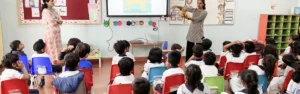
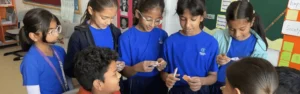
OWIS emphasises experiential learning that connects classroom concepts to real-world applications. Students take a walk to the lake to learn about freshwater ecology. Field visits, like a trip to the Planetarium, not only enthral students about our universe but also offer extensive conceptual knowledge of how planets evolved and the science behind everything that exists.
The school recognises that academic excellence without emotional well-being produces fragile success. It provides counsellors, wellness programmes, and peer support systems to ensure students develop resilience, self-awareness, and healthy coping mechanisms alongside their intellectual capabilities.
Experiencing Global Citizenship At OWIS
Through celebrations like Diwali, Chinese New Year, and other internationally renowned festivals, OWIS exposes students to diverse customs firsthand and helps them develop a genuine appreciation for different cultures.
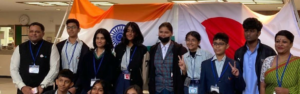
International Day serves as a marquee event that encourages cultural exchanges and mutual respect.
Through Model United Nations (MUN), students represent different countries and engage in debates on global issues, practising diplomatic communication and cross-cultural negotiation.
Language programs in Mandarin, French, and Spanish equip them with linguistic tools for international collaboration.
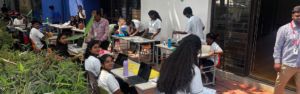
Students participate in volunteering, fundraising, and awareness-raising projects that address community needs, thereby developing social consciousness.
Conclusion: IB is Needed Now More Than Ever
The World Economic Forum consistently identifies complex problem-solving, critical thinking, and emotional intelligence as essential skills for the future.
IB Board Schools operate differently. Students engage with open-ended questions that have multiple valid approaches. They learn to tolerate ambiguity, articulate information from diverse sources, and revise their thinking when presented with new evidence.
Schools like OWIS equip students to create meaningful change through an inclusive culture and an honest commitment to their overall development.
When graduates enter universities, they’re notably more prepared for independent research and self-directed learning. When they enter workplaces, they bring adaptability, cultural sensitivity, and ethical decision-making that transform organisational culture.