

Key Takeaways
- Diverse perspectives build empathy, adaptability, and stronger real-world communication skills.
- Global learning prepares students for multicultural careers and collaborative future workplaces.
- Inquiry-based classrooms encourage critical thinking, curiosity, and respectful open-minded discussions.
- Early exposure reduces bias and improves confidence in unfamiliar social environments.
- Holistic education develops emotionally intelligent, globally aware, future-ready confident learners.
A student discusses climate change with his classmates from different cultures. Another debates ethical AI and someone else shares traditions from their home country during a classroom activity. Sounds like a university seminar? Surprisingly; this is what many modern classrooms look like today.
Children are growing up in a world where they will work, collaborate, and communicate with people whose experiences, beliefs, and perspectives may be completely different from their own. That is exactly why exposure to diverse perspectives during early education is essential.
At OWIS, students learn within internationally connected classrooms where curiosity, empathy, collaboration and cultural understanding become part of everyday learning through inquiry-led education and meaningful global interactions.
What Does Exposure to Diverse Perspectives Actually Mean?
It is not just about meeting people from different countries. Exposure to diverse perspectives means helping students –
- Understand different opinions respectfully
- Learn about multiple cultures and experiences
- Think beyond their own assumptions
- Develop empathy and open-mindedness
- See problems from multiple viewpoints
In simple words, students learn that there is never only one way to think.
Why is This Becoming More Important Today?
The world has become deeply interconnected and global companies increasingly operate through multicultural teams. At the same time, digital platforms expose students to global conversations daily. But exposure without understanding can create confusion instead of connection. That is where schools play a huge role.
Why students need global awareness early:
| Skill Developed | Why it Matters |
| Empathy | Helps students understand others respectfully |
| Adaptability | Prepares students for multicultural environments |
| Communication | Improves collaboration across differences |
| Critical Thinking | Encourages balanced decision-making |
| Emotional Intelligence | Builds healthier relationships |
The future workplace will not reward students who only memorise facts. It will reward those who can work well with people.
How Do Diverse Perspectives Improve Learning?
Interestingly, students often learn better when exposed to different viewpoints. When classrooms encourage discussion, debate, storytelling and collaboration, students naturally –
- Ask deeper questions
- Think more critically
- Become less judgmental
- Learn problem solving faster
- Improve confidence in communication
That means exposure to different viewpoints does not distract from education; but it strengthens it.
What Happens When Students Only Experience Similar Perspectives?
When children grow up in limited social bubbles, they may –
- Struggle with adaptability
- Fear of unfamiliar situations
- Develop unconscious biases
- Find collaboration difficult
- Resist different opinions
The goal of education should not be creating identical thinkers. It should be helping students become thoughtful, emotionally intelligent individuals who can engage respectfully with the world around them.
Which Daily Activities Help Students Understand Diverse Perspectives?
Students do not need international travel to develop global awareness. Even small activities can make a huge noticeable difference.
Simple ideas schools and families can try:
| Activity | Learning Outcome |
| Reading global stories | Improves cultural understanding |
| Group discussions | Encourages respectful listening and observation |
| Collaborative projects | Builds teamwork skills |
| Cultural celebrations | Increases curiosity and inclusion |
| Debate activities | Develops analytical thinking |
| Community service | Builds empathy and awareness |
Even asking children simple open-ended questions can slowly strengthen perspective-taking skills. Encourage them!
Why Does Global Learning Matter So Much for Future Careers?
Here is the reality: future careers will increasingly involve working across cultures, industries, and countries. Companies today look for people who can:
- Collaborate globally
- Communicate respectfully
- Solve complex problems
- Adapt quickly
- Understand cultural differences
That is why global learning is becoming central to modern education systems. Students who understand multiple perspectives often become:
- Better communicators
- Stronger leaders
- More creative thinkers
- More adaptable professionals
Ironically, as AI and automation grow, human skills such as empathy and collaboration become even more valuable.
What Challenges Do Students Face Without Perspective Exposure?
Students who lack exposure to different viewpoints may struggle with:
| Challenge | Possible Impact |
| Low adaptability | Difficulty handling changes |
| Social discomfort | Fear of unfamiliar situations |
| Limited critical thinking | One-dimensional problem-solving |
| Bias and stereotypes | Reduced empathy |
| Poor collaboration | Difficulty working in teams |
This is why perspective-building should begin early rather than waiting until adulthood.
How Do International Learning Environments Support This Growth?
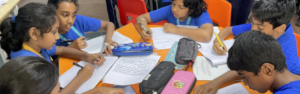
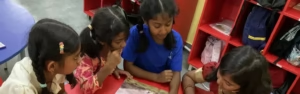
Schools that prioritise inquiry-based and collaborative learning naturally create stronger exposure to different ideas. At OWIS, students regularly participate in:
- Inquiry-led discussions
- Collaborative classroom projects
- Multicultural learning experiences
- Reflection based activities
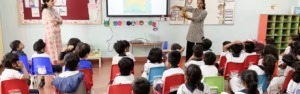
- Student presentations and teamwork
These experiences help students become more confident in expressing opinions while also learning how to respect different viewpoints.
Among many leading IB schools in Bangalore India, OWIS focuses strongly on nurturing internationally minded learners who understand both academic excellence and human connection.
What Role Does the PYP Learning Approach Play?
The PYP syllabus encourages students to become curious, reflective, and globally aware learners from an early age. Instead of passive memorisation, students are encouraged to:
- Ask meaningful questions
- Explore real world topics
- Work collaboratively
- Reflect independently
- Connect learning with everyday life
This inquiry-based approach naturally exposes students to multiple perspectives while helping them think more deeply and independently.
How Can Parents Encourage Open-Minded Thinking at Home?
Parents shape perspective-building more than they realise. Some easy habits families can practise:
- Encourage respectful discussions at home
- Introduce books from different cultures
- Avoid ignoring children’s opinions quickly
- Teach active listening during conversations
- Encourage curiosity rather than making judgments
Sometimes, just listening without making any immediate corrections can ensure deeper and meaningful conversations.
Why Are Parents Prioritising Holistic Learning More Today?
Many parents exploring good schools in Bangalore, are increasingly looking beyond exam results alone. They want schools that help children:
- Develop confidence with learning
- Communicate seamlessly
- Develop emotional intelligence
- Learn collaboration
- Think confidently and independently
- Understand the global issues
Academic success without social and emotional awareness is incomplete.
How Does OWIS Create Globally Minded Learners?
OWIS focuses on creating learning environments where students feel:
- Heard
- Respected
- Curious
- Collaborative
- Emotionally safe
Students learn within multicultural classrooms that encourage inquiry, teamwork, empathy, and open dialogue. This helps them grow into confident global citizens prepared for both academic success and real-world human interaction.
Rather than limiting learning to textbooks, OWIS encourages students to understand the world through discussion, exploration, creativity, and meaningful collaboration.
Final Thoughts: Why Perspective Shapes the Future
The future will belong to students who can understand people as well as information. Exposure to diverse perspectives helps students become kinder, wiser, more adaptable and more capable of thriving in globally connected environments. It strengthens not only academics but also emotional intelligence, leadership, creativity and communication.
OWIS encourages students to grow beyond boundaries through globally connected classrooms, inquiry-led learning and collaborative experiences that prepare them for life in an interconnected world. Get in touch now and discover how it nurtures future-ready learners through meaningful global learning experiences and holistic education.
FAQs
They help students build empathy, critical thinking, adaptability, communication skills and cultural understanding.
Global learning prepares students for multicultural environments, future careers, and collaborative problem-solving.
The PYP syllabus encourages inquiry, reflection, collaboration, and exploration of real-world global issues.
Parents can encourage discussions, introduce global stories and practise active listening regularly.
Holistic schools support emotional intelligence, creativity, communication and future-ready life skills alongside academics.