

What if digital literacy didn’t always mean more screen time?
Here’s something worth thinking about: children today are growing up in a world where screens are everywhere, but understanding the digital world goes far beyond just using devices.
Parents often search for digital literacy education; expecting coding classes or more tech exposure. But the real question is that how do you build digital literacy skills without overwhelming children with constant screen time?
That’s where the approach taken by some of the best IB schools in Bangalore begins to stand out, especially schools like OWIS that balance technology with mindful, real-world learning.
What Does Digital Literacy Actually Mean Today?
Digital literacy is not only about knowing how to use a tablet or laptop. It is about –
- Understanding how information is created and shared
- Thinking critically about what you see online
- Communicating responsibly in digital spaces
- Knowing when to disconnect
In essence, it is a life skill. Digital awareness is now a core component of 21st-century learning under the National Education Policy (NEP) 2020; reinforcing its importance across schools.
Why is Screen Overload a Real Concern?
More screen access does not always mean better learning.
A recent report highlighted that excessive screen exposure among students can impact attention span, sleep patterns, and even emotional well-being.
What does this mean for parents?
- More screen time does not mean better digital understanding
- Passive consumption reduces critical thinking
Balance is essential and this is exactly why the best international schools in Bangalore are rethinking how digital learning is delivered.
How Can Schools Teach Digital Literacy Without Screens?
The smartest approaches don’t start with devices; they start with thinking.
Practical, Screen-Free Strategies
- Discussion-based learning: Students analyse real-world scenarios like misinformation or online safety through classroom conversations.
- Role-playing activities: Acting out situations like cyberbullying or digital communication helps children understand consequences.
- Project-based learning: Research, collaboration and presentations build digital thinking without constantly using digital devices.
- Offline problem-solving tasks: Encourage logical reasoning as the foundation of all digital skills.
The idea is simple: build the mindset first, then introduce the tools.
Which Learning Approach Works Best for Balanced Digital Skills?
This is where the International Baccalaureate courses framework shines. The IB approach focuses on:
- Inquiry-based learning
- Critical thinking
- Real-world application
- Reflection and self-awareness
How this helps:
| Traditional Approach | IB Approach |
| Focus on tools | Focus on thinking |
| Passive learning | Active exploration |
| Screen-heavy tasks | Balanced methods |
| Fixed outcomes | Open-ended learning |
This is why many parents are drawn to IB programmes. These programs prepare students for life, not just exams.
When Should Children Start Learning Digital Literacy?
Earlier than most people think, but not in the way you might expect.
Ideal progression:
- Early Years: Understanding communication, storytelling and basic awareness
- Primary Years: Learning responsibility, critical thinking and safe behaviour
- Middle Years and beyond: Applying digital skills in research, collaboration and problem-solving
This gradual approach is followed across many international schools, ensuring students grow into technology and do not get overwhelmed by it.
Where Does Balance Come From in Digital Education?
Balance isn’t accidental; it’s designed. Schools should focus on getting these things right:
- Limit unnecessary screen exposure
- Blend physical and digital learning
- Focus on outcomes and not tools
- Prioritise student well-being
What technology and digital learning resources are integrated into the campus?
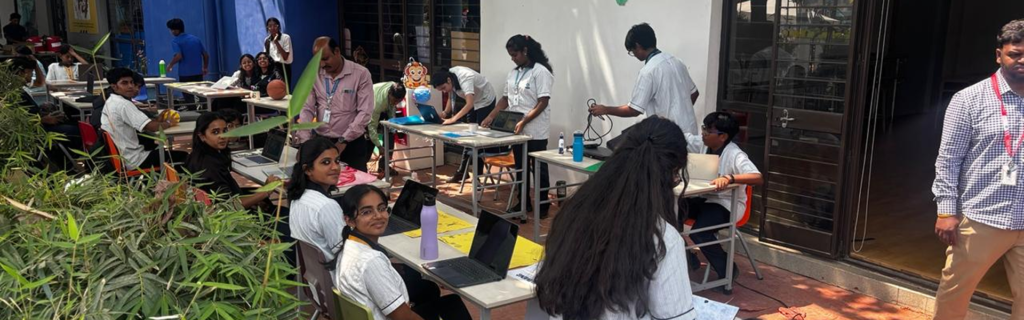
OWIS integrates technology, interactive classrooms, coding and design tools, and digital research resources into everyday learning, ensuring screens support curiosity and critical thinking rather than replacing hands-on discovery.
How Does OWIS Approach Digital Literacy Differently?
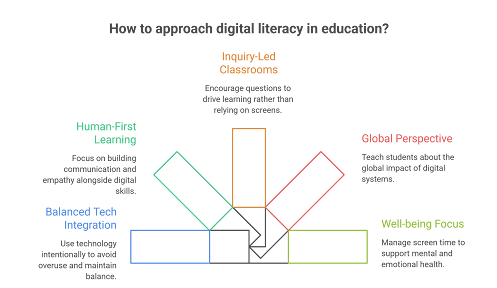
At OWIS, digital literacy is not treated as a separate subject; it’s embedded into everyday learning in a thoughtful and balanced way. What makes OWIS stand out –
- Balanced tech integration: Technology is used intentionally and not excessively to ensure a balanced tech integration.
- Human-first learning: Students build communication, empathy and awareness alongside digital skills.
- Inquiry-led classrooms: Questions drive learning and not screens.
- Global perspective: Students learn how digital systems can impact the world and not just how to use them.
- Well being focus: Screen time is managed to support mental and emotional health.
It’s a model that reflects what modern education should feel like: relevant, balanced and future-ready.
Final Thought: It is Not About More Screens, It is About Smarter Learning
Digital literacy is not about giving children more access to technology. It is about helping them understand when, why and how to use it. The right school does not just prepare students to use devices, it prepares them to navigate a digital world with confidence, clarity and responsibility.
And perhaps the bigger question is this: in a world shaped by technology, who is teaching children not just to consume it, but to question it, shape it and lead with it?