

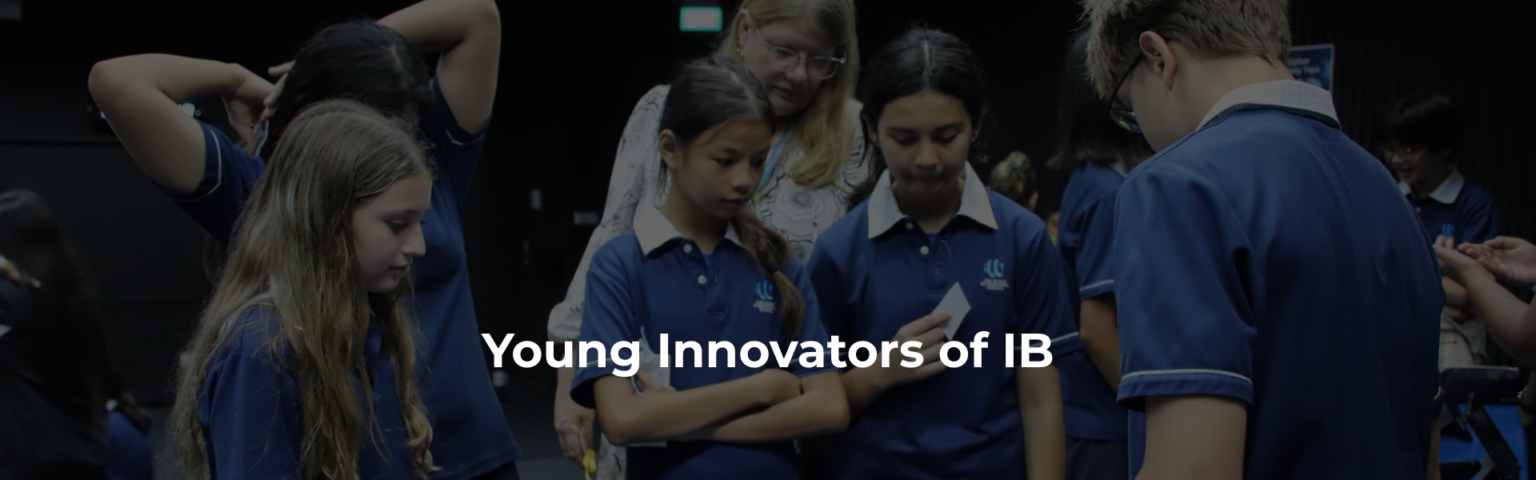
Ever wondered how IB students develop into future global problem-solvers and leaders?
The world is changing quickly, requiring young thinkers who can connect ideas, collaborate across cultures, and turn imagination into solutions.
A World Economic Forum “Future of Jobs Report” indicates that creative thinking and socio-emotional attitudes – resilience, flexibility, agility, curiosity, and lifelong learning are the top skills projected to grow faster than others.
At OWIS India, we believe every student can be a young innovator. Our IB programmes, supported by experiences inspired by the Young Innovators Internship Programme, help students move from ideas to action.
From classroom inquiry to real-world internships, empower learners to develop skills and grow as confident contributors in a fast-changing world.
How the IB Framework Nurtures Young Innovators?
The International Baccalaureate is not just a curriculum but a mindset that fosters questioning, creativity, and innovation.
Unlike traditional systems that emphasise memorisation of facts, the IB approach aims to cultivate thinkers who explore new possibilities and challenge boundaries.
Evidence from the University of Oxford shows that International Baccalaureate students have much stronger critical thinking skills than non-IB peers.
Here’s how IB serves as a launchpad for young innovators:
- Inquiry-Driven Learning That Fuels Curiosity
From the earliest years, IB encourages students to ask questions, design experiments, and solve open-ended problems. Instead of memorising answers, students in IB classrooms are guided to investigate, test, and reflect on core skills for any innovator.
- Interdisciplinary and Collaborative Learning
IB projects require learners to connect knowledge across science, maths, the arts, and humanities. Collaborative group work, design challenges, and community service all model how innovation actually works in the real world by blending ideas and teamwork.
- Service and Real-World Problem Solving
Creativity, Activity, and Service (CAS) in the IB DP programme, IB asks students to design and lead real initiatives – start a club, develop a tech solution, or organise a community campaign.
These experiences turn classroom ideas into impactful solutions.
- Growth Mindset and Reflection
IB’s emphasis on reflection, self-assessment, and peer feedback helps students become resilient. They learn that setbacks are opportunities for iterating, improving, and trying new solutions.
This mindset is at the heart of real-world innovation and entrepreneurship.
How OWIS India helps Develop Young Innovators
At OWIS India, we make innovation a daily experience by –
- Inquiry at the Core –Teachers spark curiosity with “wonder walls,” open-ended questions, and real-world problems to explore.
- Collaboration and Leadership – Projects encourage teamwork. Older students guide younger ones. This helps build confidence and leadership at each stage.
- Expert Mentorship – Professionals, entrepreneurs, and university partners guide student projects, giving honest feedback and career insights.
- Showcasing Student Voice – Every child has opportunities to present, pitch, and celebrate their projects with the school and community.
| OWIS Practice | What Students Experience | Innovation Outcome/ Skill |
| Inquiry-Based Learning | Exploring real-world questions in all subjects | Critical thinking, creative inquiry |
| Interdisciplinary Projects | Group work linking STEM, humanities, and arts | Collaboration, Problem-solving |
| Student Agency & Ownership | Learners choose issues they care about, lead projects, pitch their ideas, receive feedback, refine, and iterate. | Confidence, leadership, ownership, and self-motivation. |
| Community Service | Launching social and entrepreneurial projects as part of IB CAS and MYP pathways | Social impact, empathy, and global citizenship. |
| Peer Mentorship & Leadership | Seniors leading teams, all ages presenting & teaching | Communication, teamwork, resilience. |
Parent and Community Partnerships – Innovation Beyond the Classroom
At OWIS India, one of the best schools in Bangalore, we focus on developing young innovators is a collaborative effort extending beyond the classroom.
Parents are encouraged to engage in the learning process by attending student innovation expos, providing feedback during project presentations, or joining online demos where children showcase their ideas.
Moreover, we also organise parent workshops focused on fostering inquiry and creative problem-solving at home, so families can support and celebrate their child’s growth.
These partnerships help students feel valued by their parents and the wider community. This builds a sense of purpose, pride, and confidence. By linking classroom learning with real-world relationships, OWIS India enables every student to become a true innovator for life.
Conclusion
A changing world requires students to think boldly, collaborate, and convert dreams into real solutions.
At OWIS India, each IB classroom acts as a springboard for young innovators, fostering curiosity, empathy, and ambition on a daily basis.
By integrating inquiry, authentic projects, and innovative programs, we empower students to see problems as possibilities and potential as limitless.
If you want your child to graduate as a thoughtful, creative global citizen, there’s no better place to start than OWIS India’s IB Programmes – where the next generation of innovators is already at work.
FAQs
- How does the IB Approach to innovation compare to other boards?
The IB emphasises inquiry, real-world projects, and multi-disciplinary collaboration, equipping students with the 21st-century skills top employers want.
- How can parents help develop these skills at home?
Parents can encourage curiosity, foster resilience, support extracurricular projects, and celebrate innovation to support student led projects.
- What specific skills are developed?
IB programmes are designed to cultivate a range of skills and attributes like critical thinking, creative thinking, risk-taking, collaboration & communication skills, and Independent learning.

With campuses located in Osaka's Ikuno ward & Ibaraki's Tsukuba City, OWIS Japan delivers IB-certified inquiry-based education to children aged 3-18. We foster a multicultural environment where students grow into future-ready independent thinkers, equipped with critical thinking, creativity and a love for learning. Our commitment to rigorous academics and personal development prepares students to excel in a global landscape.