

How Can Students Improve Their Presentation Skills?
Today, where video calls, webinars and virtual classrooms are part of daily life; mastering public communication skills is a must. The ability to express yourself confidently online can open doors you never imagined. The modern professional world makes persuasive communication a must have skill for both personal and career growth.
At One World International School (OWIS), we believe that strong communication is one of the most vital 21st-century skills. It shapes how students connect, collaborate and make an impact; both in and beyond the classroom. Our IB Syllabus helps students learn to present their ideas effectively, embrace global perspectives and develop the confidence to lead conversations that matter.
This guide will walk you through everything you need to know about what are presentation skills and how to elevate them to the next level.
Adapting to online presentation environments
Online presentations just need different approaches than in-person ones. The virtual world needs specific adjustments that help your message strike a chord with the audience.
What Are Online Presentation and Communication Skills?
Simply put, presentation skills are your ability to convey information clearly, confidently and engagingly to an audience. But in a virtual setting, the rules change slightly. You are not just communicating your ideas; you are also managing lighting, camera angles, tone, facial expressions and digital etiquette.
Public communication skills go beyond speaking. They include listening actively, reading non-verbal cues and adapting your message to suit diverse audiences.
At OWIS, we integrate these essential skills into every stage of learning so students grow into articulate, empathetic communicators ready for the real world.
Why Speaking Skills Matter in the Digital Age?
Communication has never been more significant than in our present digital era. Despite the abundance of texts and emails; verbal communication skills remain a popular priority for meaningful human connections. A 2023 study highlights that 85% of attendees believe a good speaker can either make or break an online event.
Strong speaking abilities help prevent miscommunications and promote authenticity in a world where digital channels often overshadow personal interactions. Good communication is the life-blood of personal, academic and professional success.
How OWIS Promotes Communication from a Young Age?
At One World International School, we know that communication skills development starts early. Our approach focuses on several key strategies-
- Reading and storytelling to boost vocabulary and fluency
- Verbal expression through discussions, debates and presentations
- Emotional intelligence growth when students learn to understand their feelings
- Fun learning environments that build strong communication bonds
At OWIS, we see communication as the backbone of success. That is why the IB Diploma Programme emphasises inquiry, reflection and effective communication as key learner attributes.
What Are the Most Effective Techniques to Create Powerful Presentations?
The audience retains information 40% more accurately when presentations follow a well-laid-out structure rather than random information delivery. Here is what you can try-
- Start with a strong hook
- Structure your content with clarity
- Use visual aids to support your message
- Practise with feedback loops
Adapting to online presentation environments
Online presentations just need different approaches than in-person ones. The virtual world needs specific adjustments that help your message strike a chord with the audience.
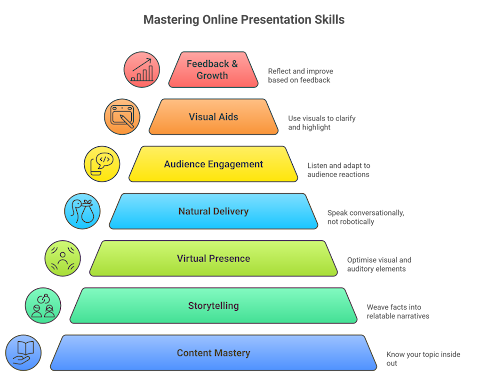
Step 1: Know Your Content Inside Out
The golden rule of great communication – Know your stuff.
Mastery over your topic gives you confidence. Research thoroughly, structure your key points and anticipate possible questions.
Students at OWIS are encouraged to follow a “research-reflect-present” approach; where understanding concepts deeply helps them express ideas clearly and authentically.
Pro tip: Create a brief outline or mind map before presenting. It helps keep your thoughts organised and your delivery smooth.
Step 2: Master the Art of Storytelling
Facts inform, but stories inspire. That is why storytelling is one of the most powerful public communication skills you can develop.
A good presentation is not just about data; it is about connection. When you weave facts into relatable narratives, people listen.
At OWIS, we encourage students to approach every topic through inquiry and creativity. They learn to back arguments with evidence while presenting them in a way that engages hearts as much as minds.
Step 3: Optimise Your Virtual Presence
In an online world, presentation is not just verbal; it is visual too. How you appear and sound on screen can make or break your delivery.
Here’s how to make your online presence shine-
- Lighting matters– Face a natural light source or use soft natural lighting to brighten your space.
- Sound check- Use a quality microphone or headphones to ensure clarity.
- Eye contact- Look confidently into the camera, not at the screen to simulate a real connection.
- Posture counts- Sit upright, maintain open body language and smile genuinely.
Students at OWIS gain confidence quickly when they practise these small yet effective techniques during virtual classroom sessions and interactive projects.
Step 4: Prepare, But Don’t Memorise
Preparation is key, but memorisation can make you sound robotic. Instead, internalise your main points and speak naturally.
“Be prepared, not perfect.” The International Baccalaureate Middle Years Programme nurtures exactly this mindset; one that values curiosity, adaptability and authenticity over memorised perfection.
Practise with a timer, record yourself and review your tone and pace. The goal is to sound conversational, not scripted.
Step 5: Listen to Your Audience
Even online, communication is a two-way street. Great presenters don’t just talk; they listen.
Pay attention to audience reactions, nods and comments. Adjust your tone or pacing accordingly. If you are hosting a Q&A, respond thoughtfully and stay open to different viewpoints.
At OWIS, collaborative communication is the cornerstone of IB learning. Students participate in discussions, debates and peer feedback sessions that build empathy and adaptability for strong public communication skills.
Step 6: Use Visuals to Support Your Message
Visual aids can elevate any presentation, when used wisely. Slides, videos or infographics can help clarify complex ideas and make your talk more memorable.
Keep it simple- Avoid cluttered slides and long text blocks. Use visuals to highlight; not distract.
Step 7: Embrace Feedback and Keep Growing
Growth happens through reflection. After your presentation, ask for constructive feedback and suggestions from teachers or peers. What worked well? What could be improved?
OWIS encourages students to self-evaluate after each project or presentation. This reflective practice builds resilience and a growth mindset; helping learners become lifelong communicators and confident global citizens.
How OWIS Helps Students Master Communication?
At OWIS, communication is not taught as a standalone skill. Through inquiry-based learning, interdisciplinary projects and collaborative discussions, students refine both their public communication skills and their confidence in expressing ideas.
Here is how we make it happen-
- Interactive classrooms- Encouraging debate, dialogue and creative expression.
- Technology integration- Equipping students with digital tools for virtual presentations.
- Global exposure- Fostering multicultural awareness through the IB Diploma and Middle Years Programme.
- Safe environment- Creating spaces where students feel comfortable experimenting and speaking up.
When students learn in such nurturing environments, communication becomes second nature and confidence follows.
Final Thoughts: Speak Up, Shine Bright
Mastering presentation skills is not just about speaking clearly. It is about thinking critically, connecting authentically and inspiring others with your words.
At OWIS, we believe every child has a voice worth hearing. By blending academic rigour with emotional intelligence, we help students grow into confident communicators ready to take on a global stage.
So, the next time you are asked to present; whether online or in person; remember: you are not just sharing information. You are shaping ideas, sparking curiosity and making an impact that goes far beyond the screen.
Explore more on how OWIS can nurture confidence, curiosity and world-class communication through our globally recognised IB programmes.