



Why Campus Culture Matters More Than Curriculum |
When parents and educators discuss what makes a school “great”, much of the focus falls on curriculum. The rigorous academics, test scores, and syllabus frameworks become the talking point. But over and over, research and lived experience show that campus life – how students live, interact, learn beyond the classroom, in the dorms or common rooms, in extracurriculars, through peer culture – is often just as, if not more, influential in shaping learners who are resilient, curious, empathetic, and ready for the real world.
In exploring why campus life matters more than curriculum, we will look at how the impact of culture on education plays out in vibrant school settings. We will examine real examples, including OWIS and its IB-based programmes, particularly from early childhood and education, to see how a holistic campus experience often opens doors to potential that no curriculum can reach alone.
Why Does Culture Set the Tone for Student Growth?
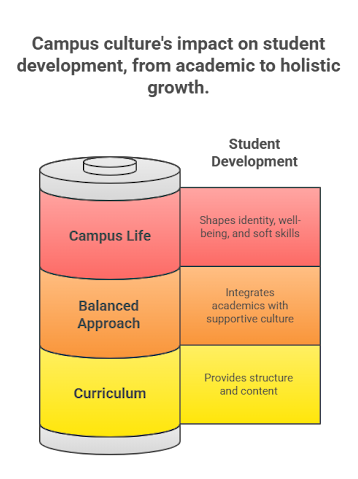
Curriculum provides structure, a map of content to cover. But cultural influence on education determines how students respond to that map, how deeply they engage, and whether they feel a sense of belonging or isolation. When a campus cultivates norms of respect, curiosity, and inclusivity, students feel safe to take intellectual risks. That safety, that atmosphere, becomes the foundation in which real learning is built.
Cultural influence on education not only entails international diversity and rituals but also the daily interactions, such as how teachers talk with students, how students collaborate, and how failure is treated. Harvard students frequently say that some of their biggest lessons came not from lectures, but from clubs, from student government, from late-night debates.
How Do Relationships Shape Learning Beyond the Classroom?
In many accounts, it’s neither the textbook nor the syllabus that leaves a lasting imprint. It’s the relationships we nurture. Teachers who know their students well, peers who challenge and support, mentors in arts, sports, or service projects; these relationships build character: empathy, leadership, and communication.
Campus life furnishes far more chances for this kind of relational learning than classes do. Be it debate teams, theatre, sports, arts, community service, or informal dialogues, students’ interpersonal skills sharpen outside the classroom walls. The role of campus life in student success shows that those who are socially engaged often perform better academically, have higher emotional intelligence, and leave school less stressed.
Identity formation, sense of belonging, and diversity
Another dimension where campus life outdoes curriculum is identity formation. School culture brings together students from varied backgrounds; how schools treat diversity, how they facilitate cultural exchange, and how inclusive they are profoundly shape students’ sense of self and others.
In India, research supports that socio-emotional learning and inclusive school practices enhance confidence and teamwork among students from different backgrounds.
For instance, integrating different cultural traditions into school events, supporting multilingualism, and celebrating multiple identities contribute to a stronger student identity. That’s part of the impact of culture on education: when students see their own culture respected, and others, they feel more anchored and open. That bolsters motivation, reduces anxiety, and increases academic engagement.
How campus life supports curriculum implementation
You might wonder: isn’t the curriculum supposed to do much of improving a student’s overall growth already? A good curriculum increasingly includes experiential learning, project-based work, community service, and simulates actual problems. Yet even the best ones often depend on campus infrastructure, school culture, and teacher mindset to succeed.
Take the IB Programme examples. There are several IB curriculum schools in Bangalore, like OWIS, where the curriculum is rich in inquiry, global-mindedness, and academic rigor. But what elevates the experience is how campus life at OWIS supports those curricular goals: dynamic learning spaces, ample opportunities beyond the classroom (arts, sports, student organizations), community events, and a supportive culture that values more than grades. Without those, even the IB curriculum can feel dry, over-pressured, or disconnected.
What Role Does Early Childhood Culture Play in Learning?
Campus culture starts shaping students from their very first year in school. At One World International School (OWIS), the IB Early Years Programme for children aged between 3 and 6 is built on play-based learning that encourages exploration and inquiry. Instead of relying on rote learning, teachers act as facilitators, creating opportunities for children to ask questions, collaborate with peers, and develop independent thinking skills.
The early environment sets the tone for how students will approach learning later on. The culture of curiosity, respect, and safety helps children develop confidence, social awareness, and academic readiness. The physical campus contributes to exuberant learning spaces and interactive corners, making discovery a natural part of the school day.
When it’s time to move from early years to primary school, OWIS focuses on continuity. Consistent routines, supportive teacher-student relationships, and smaller class sizes ensure a smooth transition. The stability reduces stress and allows students to stay engaged with the learning process, rather than simply adjusting to change.
How Does Campus Life Build Real-World Skills and Readiness?
One thing curriculum often underplays is soft skills: collaboration, perseverance, adaptability, culturally sensitive communication, and leadership. Campus life presses students into real situations that test and build those skills. For example, coordinating a student festival, handling peer conflicts, navigating cultural differences, and time management in balancing academics and extracurriculars forge character.
In IB schools, cultural influence on education means students regularly interact with peers from different nationalities, learn languages, attend cultural festivals, or Model UNs, which shape global competence. Curriculum may encourage these, but campus life enables them.
Why Is Campus Culture Crucial for Student Well-Being?
An often overlooked but critical dimension of the impact of culture on education: student well-being. A curriculum may include health education and mindfulness, but campus life determines whether students receive breaks, whether they feel supported, and whether there is time to rest, socialize, and recover. Burnout, anxiety, and depression often stem not from content difficulty alone but from lack of social support, from isolation, from a campus culture that values performance over balance.
Numerous research studies repeatedly underline that when campus life encourages free expression, peer bonding, and supportive teacher relationships, students are more resilient, happier, and perform better.
The Lasting Impact of Campus Life
Curriculum evolves. Syllabi get revised, and textbooks get replaced. But the experiences students gain on campus stay with them far longer. The friendships they form, the mentors who guide them, the debates they participate in, the performances they stage, and even the failures they turn into learning moments mould them into the individuals they become.
Years later, when students look back on their education, it’s often these moments outside formal lessons that stand out. Late-night study sessions, field trips, cultural events, and community projects leave an imprint on their values and worldview. Campus life shapes not just what students know, but who they are.
Balancing curriculum and campus culture: how schools can do both
Recognising the importance of campus life shouldn’t mean diminishing the value of a school curriculum. Instead, the most successful schools integrate both: a strong academic programme with a rich, supportive, values-driven campus culture.
Some practices that work:
- Designing extracurriculars that align with academic goals (e.g., science clubs, debate, arts).
- Teacher training encompasses not only content delivery but also mentorship, emotional intelligence, and cultural sensitivity.
- Spaces (libraries, lounges, sports facilities) that invite informal learning and community building.
- Structured support during major transitions (e.g., from early childhood to primary years; primary to secondary years).
- Celebrating culture: festivals, international days, and peer interactions that honour diversity.
Conclusion
Yes, curriculum matters. A robust academic programme is essential. However, campus life matters more than the curriculum in many ways that contribute to long-term outcomes, including identity, motivation, well-being, soft skills, and relationships. The impact of culture on education is unfathomable: it shapes what students believe they can do, whether they feel connected, and whether they are curious enough to push boundaries.
For parents choosing between schools, for educators designing them, the question shouldn’t be only “what curriculum does the school follow,” but “what is the culture of this campus?” What is life like beyond the classroom? In the end, a curriculum can teach what, but campus life teaches who and how, and sometimes why.