

Ever wondered what sets IB students apart?
Is it their global exposure, academic rigour, or the unique skills they acquire for life beyond school?
For many parents, understanding the IB student international baccalaureate requirements is the key to deciding if the IB board in India is the right choice for their child.
At OWIS, one of the leading International IB Schools in Bangalore, these skills are nurtured intentionally – every lesson, curriculum, and project is designed to build habits that last a lifetime.
What is the IB Board in India, and why do Families Choose it?
The International Baccalaureate Board in India offers a globally respected curriculum. IB schools go beyond rote memorisation; they nurture well-rounded thinkers, communicators, and future leaders.
At OWIS, we focus on inquiry-based learning, project work, cultural awareness, and practical skills, helping students upskill and achieve career growth.
What Makes IB Students Unique?
IB students are unique due to the holistic education, which develops critical thinking, a global perspective, and attributes of the IB Learner Profile.
They uniquely emphasise interdisciplinary learning, inquiry-based methods, and developing skills like communication, risk-taking, and reflection, preparing them for university.
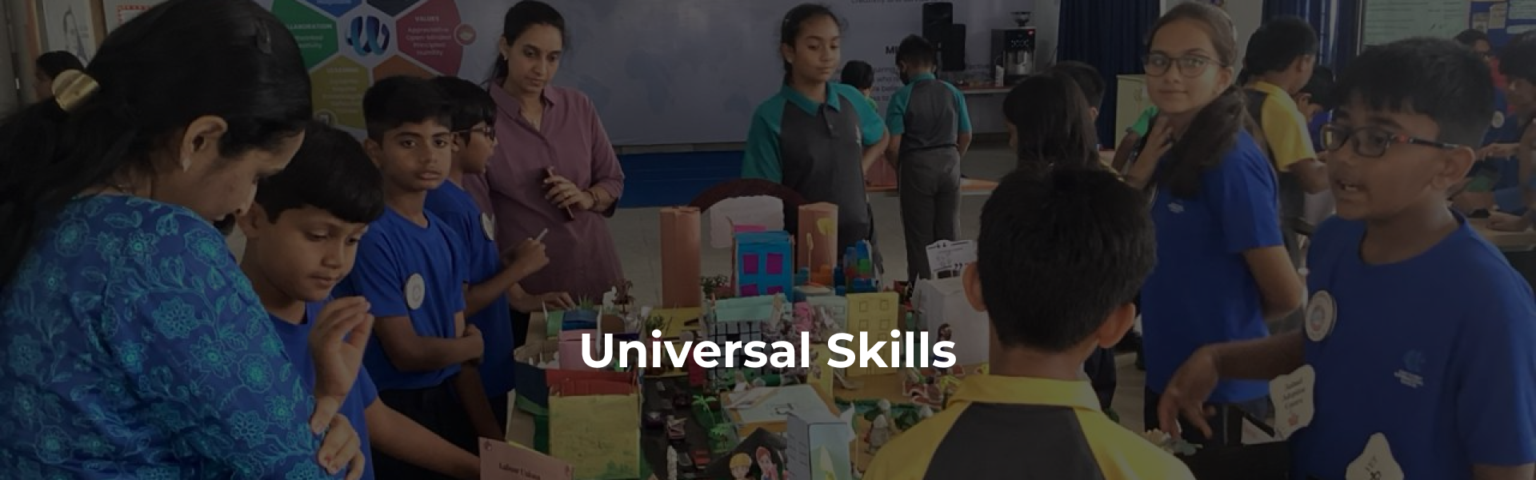
Here are some of the universal skills that IB students develop along their learning journey.
Critical Thinking and Problem Solving
Critical thinking is one of the crucial skills that students learn to evaluate information, ask questions, evaluate evidence, and make thoughtful arguments across diverse contexts.
It helps students to conceptualise problems within a global framework and understand the distal consequences of policies.
The two components of the IB programme – “Theory of Knowledge” that teaches critical thinking in a domain-general fashion, and “Extended Essay” involve producing a long-form research essay where students are required to apply their critical thinking ability in a domain-specific manner.
Strong Communication Skills
The IB curriculum builds strong communication skills by structuring learning around required teamwork, verbal representations, and the need to exchange ideas across multicultural boundaries.
These skills are part of the core “Approaches to Learning” (ATL) and are cultivated across all subjects and core components (TOK, EE, CAS) through a variety of methods designed to foster well-rounded, articulate individuals.
Within the IB Framework, communication skills are developed through activities like inquiry projects, presentations, and group work that enhance communication.
Self-Management and Research Skills
IB learners cultivate self-management skills by engaging in planning, projects, and reflection. This nurturing process gently fosters their independence, discipline, and organisation, empowering them to confidently manage large workloads on their own.
Self-management in the IB framework assists students in acquiring vital time management skills, effective planning for complex deadlines such as the Extended Essay or Personal Project, and goal-setting techniques.
On the other hand, Research skills help students learn how to formulate effective research questions, gather and critically evaluate diverse sources for credibility and bias, and synthesise data to construct reasoned arguments.
Global Mindedness as a Daily Practice
IB schools focus on providing students with a global perspective and cultural awareness. They learn about different cultures, languages, and views through the curriculum and interactions with International students.
They cultivate an understanding and appreciation of various cultures, fostering respect and celebration of differences. Global awareness encourages children to become open-minded adults capable of thriving in multicultural workplaces and international communities.
Furthermore, it fosters a sense of responsibility towards global challenges, social justice, and sustainability, thereby shaping them into responsible global citizens.
Initiative and Leadership Skills
The Creativity, Activity, Service (CAS) component is a cornerstone of the IB programme, specifically designed to cultivate practical leadership skills.
Students proactively identify community needs or personal interests, conceptualise ideas, and develop action plans.
The process requires them to launch their own initiatives, such as organising a local charity event or mentoring young peers and adapt to logistical setbacks by finding creative solutions and demonstrating resilience.
What Long-Term Benefits Do IB Students See in Their Careers?
IB students see long-term benefits in their careers because they enter the workforce equipped with the soft skills and global mindset that employers increasingly demand.
| Universal Skill Developed | Long-Term Benefit |
| Critical Thinking & Problem Solving | Ability to analyse complex issues, make sound decisions, and thrive in knowledge-based careers. |
| Strong Communication | Confidence in expressing ideas, leading teams, and collaborating across cultures. |
| Self-Management and Research Skills | Success in University-level academics, project management, and independent work. |
| Global Mindedness | Ease of working in a diverse environment and contributing responsibly to society. |
| Initiative and Leadership Skills | Strong personal drive, resilience, and capacity to lead meaningful change. |
Conclusion
IB Students stand out because they develop into thoughtful, reflective, compassionate, and globally-minded individuals.
Their universal skills, including communication, critical thinking, leadership, independence, and cultural awareness, enable them to succeed in school, university, and beyond.
At OWIS Bangalore, these skills are taught in isolation; they are woven into daily learning. As one of the leading IB schools in Bangalore, OWIS empowers students to become confident learners and responsible global citizens.
FAQs
- What skills help an IB Student succeed the most?
Skills such as critical thinking, communication, time management, self-management, and research literacy are essential foundations for IB learners to succeed.
- Are IB skills useful outside academics?
Yes, these skills help students succeed in real life and future careers.