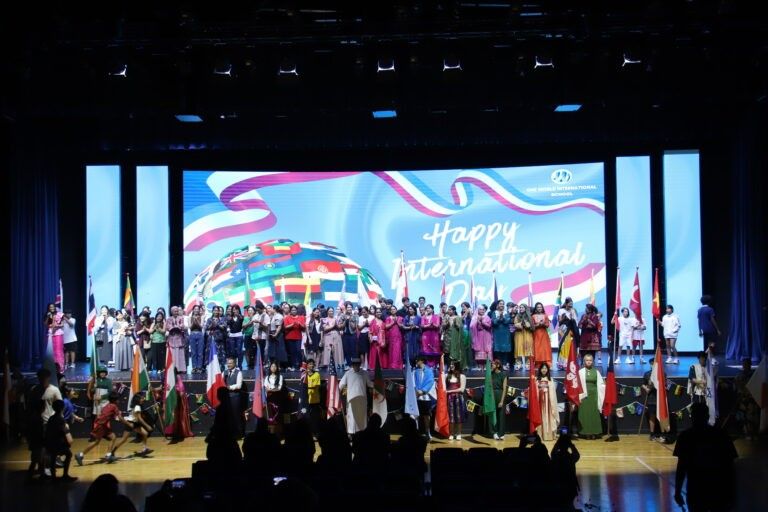
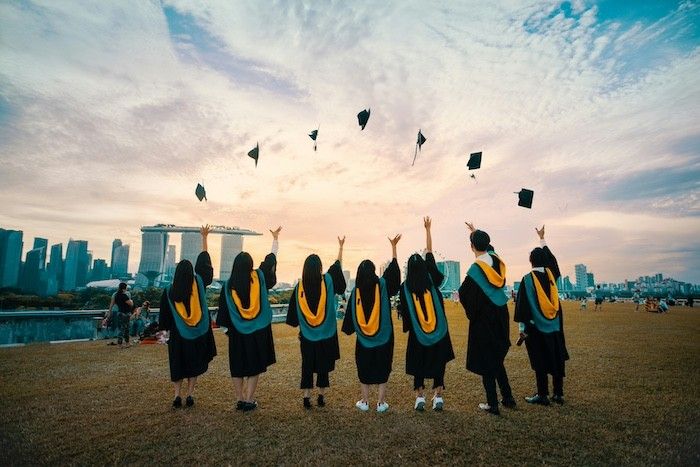
Private schools in Singapore play a key role alongside MOE public schools and government-aided schools. They include full-time private schools, international schools and private academy schools that offer diverse curricula such as IB, Cambridge, American, Australian and national systems from around the world.
Singapore has around 800 private schools, ranging from preschools and all-through international schools to enrichment centres, tuition centres, post-secondary and vocational providers serving both local and international students. For parents, this creates a rich but sometimes confusing landscape when searching for the best private schools in Singapore that fit their child’s needs.
All private schools that teach 10 or more students must be registered with the Ministry of Education (MOE) or regulated under the Committee for Private Education (CPE) and SkillsFuture Singapore (SSG). This registration confirms that the school meets baseline requirements for premises, safety, curriculum and teacher qualifications, though it is not an endorsement of quality.
When parents search online for a list of private schools in Singapore or “Singapore private school ranking”, they typically see:
- Official MOE lists of registered private schools (helpful for verifying that a provider is legitimate).
- Independent ranking-style articles that review or rate the best private schools in Singapore based on facilities, reputation, parent reviews and curriculum.
This guide focuses on two consistently recommended coed private schools in Singapore — One World International School (OWIS) and Global Indian International School (GIIS) — and explains their fees, curriculum pathways and admissions, using an easy-to-scan comparison format for 2025–26 applicants aiming for the 2025 school year.
Benefits of Enrolling in Private Schools
To understand more on Singapore education system read Public vs Private Schools
Families consider private schools in Singapore and private academies for a mix of academic, personal and logistical reasons. Key advantages include:
1. Globally recognised curricula and smoother relocation
Many private schools and international schools in Singapore offer IB, Cambridge IGCSE, A-Levels, American, Australian or other international curricula, which are widely recognised by universities around the world.
For globally mobile families, this means:
- Easier transitions between countries and school systems
- Familiar syllabi and exam structures
- Strong preparation for international university applications
2. Holistic, student-centred learning
High-quality private academy schools tend to emphasise:
- Smaller class sizes and more personalised attention
- Project-based learning, STEAM labs and skills studios
- Rich co-curricular activities (CCAs), sports and the arts
- Social-emotional learning and global citizenship
This holistic approach often appeals to parents who want more than exam results — they want a nurturing, future-ready environment.
3. Flexible admissions and pathways
Compared with highly centralised public school placements, private schools and international schools in Singapore usually:
- Offer rolling admissions or multiple intakes each year
- Provide bridging support for students moving between curricula
- Allow families to choose between different pathways (e.g. IB vs Cambridge vs CBSE in the same school, as with GIIS)
This flexibility is particularly useful for expat families arriving mid-year or students who may switch countries during their schooling.
4. Strong language and support programmes
Many of the best coed private schools offer:
- English as an Additional Language (EAL / ESL) support
- Second language programmes (e.g. Mandarin, French, Spanish, Japanese etc.)
- Learning support and enrichment for different academic profiles
For families comparing a list of private schools in Singapore, these support structures can be a major deciding factor.

How to Choose the Ideal Private School
With many options and multiple “best private schools in Singapore” lists online, it helps to use a simple checklist.
Step 1: Clarify curriculum and long-term goals
Ask yourself:
- Do we want an IB continuum (PYP–MYP/IGCSE–DP), a Cambridge / IGCSE route, or a country-specific curriculum, such as the Indian curriculum (CBSE)?
- Are we planning to stay long-term in Singapore or relocate later?
- Which qualifications align with our preferred university destinations?
OWIS and GIIS both offer a Cambridge and IBDP pathway, with GIIS adding CBSE for families who prefer an Indian national route.
Step 2: Verify MOE registration and school reputation
Check that the school appears in:
- The MOE list of registered private schools (for legitimacy and compliance)
- Reliable third-party guides and reviews that look at parent feedback, exam results, facilities and culture rather than just marketing copy.
Remember: there is no official Singapore private school ranking published by MOE or SSG — online rankings are indicative only.
Step 3: Understand the full cost of education
Beyond headline tuition, budget for:
- Application / registration fees
- Technology, textbooks, uniforms and exams
- Transport (school bus) and meals
- Optional activities, camps and trips
Use each school’s official fee schedule and ask about scholarships. GIIS, for example, publishes multiple scholarship schemes that can offset tuition for eligible students.
Step 4: Visit campuses and evaluate “fit”
Shortlist schools, then:
- Book school tours or open houses
- Observe classroom interactions, facilities and safety measures
- Talk to teachers and current parents about school culture
- Consider commute time and bus routes — a shorter journey often translates into better quality of life for your child
Step 5: Compare admissions timelines
Some private schools in Singapore run on an August–July calendar, others on January or April starts. Check:
- Latest possible application date for your target intake
- Whether assessments / interviews are required
- Visa requirements (if applicable) and documentation needed

List of Best Private Schools in Singapore
If you’re in need of a smart, parent-ready list of private schools in Singapore to compare, two names that consistently appear on independent “best private schools in Singapore” lists and parent forums are:
- One World International School (OWIS)
- Global Indian International School (GIIS)
Both are coed private schools with:
- Multi-campus options in Singapore
- Globally trusted curricula (IB and Cambridge, with CBSE at GIIS)
- Transparent admissions information and published fee structures
This guide brings together fees, curriculum & admission details for all OWIS and all GIIS campuses in Singapore, with clear comparisons you can scan quickly and with enough depth to help you decide.
Why OWIS & GIIS Rank Among the Best Private Schools in Singapore
Whole-pathway learning
- OWIS offers IB PYP, Modified Cambridge (G6–8), IGCSE and IB Diploma across Nanyang & Digital Campus, with Newton aligning to the same model (authorisation in progress for PYP).
- GIIS offers IB PYP, Cambridge (CLSP & IGCSE), CBSE and IB Diploma across its two Singapore campuses.
This means that families can access a full K–12 pathway without needing to switch schools at key transition points.
Admissions all year (seat availability permitting)
Both schools accept applications year-round, which is a major advantage for relocating families evaluating private academy schools on tight timelines. Mid-year entries are often possible, subject to assessment and seat availability.
Campuses at a Glance (2026)
| School | Campus | Location | Key Notes |
|---|---|---|---|
| OWIS | Nanyang | Jurong West Street 81 | K–12 IB pathway with IGCSE and IBDP in secondary. |
| Digital Campus | Punggol Field Walk | Purpose-built, tech-forward K–12 campus with IGCSE and IBDP in secondary; STEAM, skills studios. | |
| Newton (Now Open) | 99 Bukit Timah Rd | Central location; aligns with OWIS curriculum model (PYP authorisation in progress). | |
| GIIS | SMART Campus | Punggol Field Walk | Flagship, 21st-century learning environment; multi-curricula. |
| East Coast | Cheviot Hill | Community campus with the same core curricula ecosystem. |
Fees (2025–26): Side-by-Side
Fees vary by grade and programme, and GST changes can affect future years. Always confirm live figures on each school’s official fees page before applying.
OWIS Singapore Fees (Published Schedule)
OWIS lists annual tuition (incl. GST) for 2025–26 and clearly explains what’s included (uniforms, devices, textbooks, academic field trips). It also outlines application fees and school bus fees by zone.
OWIS Tuition (2025–26, incl. 9% GST)
| Programme | Annual Fee (S$) |
| Early Childhood 1–3 | 23,707 |
| Grades 1–6 | 23,707 |
| Grades 7–12 | 27,255 |
| Bilingual Programme (G4–5) | 25,452 |
- Application fee (one-time, non-refundable): S$1,393 incl. GST
- Fees are typically payable in three instalments per year; the inclusions listed above reduce unexpected add-ons for families planning their private school budget.
OWIS School Bus (Two-way, 2025–26, incl. GST)
- Zone 1: S$4,131
- Zone 2: S$4,592
- Zone 3: S$5,054
These transport fees are useful to factor into your total cost of attending a private school in Singapore.
GIIS Singapore Fees
GIIS provides a dynamic fees selector (choose academic year, curriculum and grade) and lists multiple payment options. The website often shares an illustrative per-term figure for specific programmes (e.g., an IB PYP term fee example). For the latest, always use the selector on GIIS’s Singapore fees page.
- Where to check: GIIS Singapore Fees page (interactive), plus the Admissions page for process and payment modes (GIRO, NETS, PayNow, MyGIIS gateway, Cashier’s Order).
- Example (from fees page FAQ): IB PYP fee cited as S$6,584.78 per term (illustrative; actual amount depends on grade & curriculum).
- Tip for fee planning: GIIS offers several scholarships (e.g., Global FUTURE-READY Merit, Dr APJ Abdul Kalam Global Skills, 9GEMS, etc.) which can significantly offset overall costs for eligible students.
Curriculum Pathways (What Each Campus Offers)
OWIS (Nanyang Campus, Digital Campus, Newton Campus)
Pathway:
IB PYP (EC–G5) → Modified Cambridge (G6–8) → IGCSE (G9–10) → IB Diploma (G11–12).
- Nanyang & Digital Campus are accredited for IB PYP/IGCSE/IBDP.
- Newton aligns with this model and is pursuing IB PYP authorisation.
What this means for families:
A single IB-led pathway with Cambridge checkpoints in middle school — ideal for continuity and concept-driven learning in private schools in Singapore that serve a globally mobile community.
GIIS (SMART Campus, East Coast)
Pathways available:
- IB PYP in Primary
- Cambridge Lower Secondary (CLSP) in G6–8
- IGCSE in G9–10
- CBSE alternative track
- IB Diploma in G11–12
What this means for families:
GIIS offers unmatched flexibility across Indian (CBSE) and international (IB/Cambridge) routes — an excellent fit if you may relocate, want to compare university entrance outcomes, or prefer to keep options open between Indian and international qualifications at one of the best private schools in Singapore.
Admissions: OWIS vs GIIS (Step-by-Step)
OWIS — 9-Step Application Process (August–July Academic Year)
- Complete the online application and upload past school reports/references.
- Pay the one-time application fee.
- Attend a parent discussion and informal student interview; academic assessments may be required for certain grades.
- Receive and accept the offer of admission.
- Get parent portal access and generate the e-contract.
- (Optional) Apply for school bus services.
- Pay tuition fees according to the installment schedule.
- Collect 2 sets of uniforms (included in fees).
- Attend first-day onboarding; parents receive tags or passes for campus access.
GIIS — Rolling Admissions (April Start to the School Year)
- When to apply: Year-round, subject to seat availability (apply by January for priority processing for the next academic year).
- How to start:
- Enquire online
- Book a campus tour/meeting
- Submit an application via MyGIIS with supporting documents
Payment options include GIRO, NETS, PayNow, the MyGIIS payment gateway and Cashier’s Order. Scholarships are available for IB/IGCSE/CBSE entrants, which is especially attractive for parents seeking affordable private schools in Singapore without compromising quality.
FAQs
1. What is the difference between public and private schools in Singapore?
Public (MOE) schools follow the Singapore national curriculum and are heavily subsidised. Private schools and international schools are independently managed, offer a wider variety of curricula (IB, Cambridge, American, CBSE, etc.), and charge higher fees but often provide more flexibility and global pathways.
2. How much do private schools in Singapore cost?
For K–12 private and international schools in Singapore, annual tuition typically ranges from about S$20,000 to over S$50,000, depending on the school, grade and curriculum. OWIS and GIIS, as covered above, sit in the more affordable to mid-range bracket relative to some of the most expensive international schools.
3. Is there an official Singapore private school ranking?
No. There is no official Singapore private school ranking issued by MOE or SSG. Instead, parents rely on:
- Official MOE/CPE lists of registered private schools
- Independent rankings and reviews from parent platforms and education blogs that rate the best private schools in Singapore based on reputation, facilities and outcomes.
Treat online rankings as a starting point, not the final decision.
4. Are there affordable private schools in Singapore?
Yes. While some international schools charge premium fees, there are affordable private schools offering competitive tuition, especially when you factor in:
- Included items (uniforms, devices, basic trips)
- Scholarships and bursaries
- Multi-child discounts (where available)
OWIS and GIIS are frequently highlighted as value-for-money private academy schools for families seeking strong programmes without top-tier price tags.
5. When should I apply to private schools in Singapore?
Many schools recommend applying 6–12 months in advance, particularly for popular grades and flagship campuses. Major intakes are often August/September (for international calendars) and January/April for some private schools. Rolling admissions may still be available closer to the start date depending on seat availability.