Watch a child deeply engrossed in play, and you’re watching a mind that’s an engine of ideas.
Whether they’re carefully building a fortress out of sofa cushions, concocting a “soup” from backyard leaves, or running a pretend grocery store, children don’t play just to pass the time. Play is how they make sense of the world. It’s their work, their research, and their joy all wrapped into one.
Inside young brains, play triggers thousands of neural connections every second. That’s why play-based learning has become the gold standard in early childhood education. Instead of forcing toddlers to sit still for rigid instruction, this approach channels their natural curiosity to make learning meaningful, lasting, and deeply joyful.
At One World International School (OWIS), play-based learning isn’t just an add-on—it’s the beating heart of our Early Childhood program.
What Exactly Is Play-Based Learning?
It’s easy to hear “play” and picture chaos, but play-based learning is thoughtful, purposeful, and intentional.
While free play lets kids follow any whim, a play-based classroom uses structured environments where teachers guide play toward meaningful developmental goals. Think of it as learning by stealth – children think they’re just having fun, but beneath the surface, key skills are locking into place.
Here’s what that looks like in action:
- Kids take the wheel: Children aren’t sitting passively listening to a teacher lecture. They are touching, building, asking questions, and driving their own discovery.
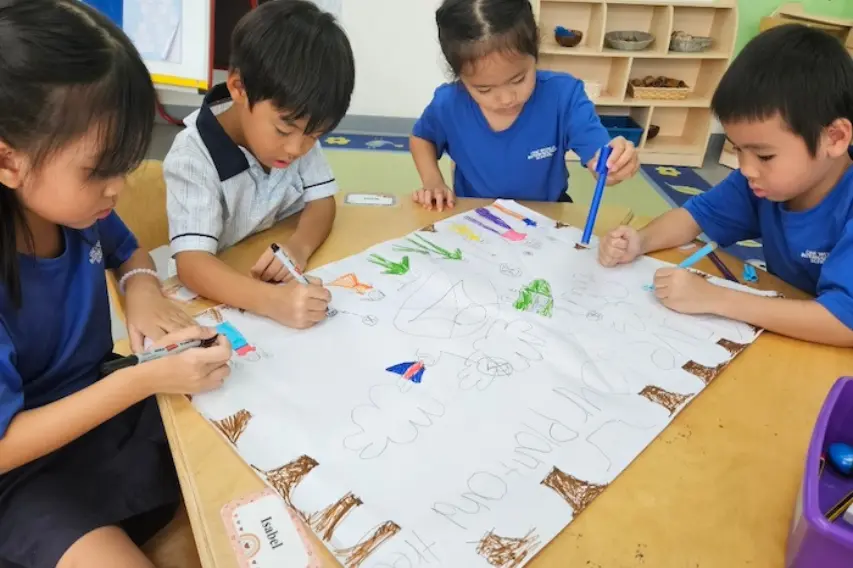
- Real-world relevance: Activities connect directly to what kids care about. Counting isn’t just numbers on a worksheet; it’s figuring out how many wooden blocks are needed to build a bridge for a toy truck.
- Natural social practice: Sharing materials, negotiating who gets to be the captain, and listening to a classmate’s idea builds real empathy and cooperation far better than a talk on manners ever could.
Our educators don’t sit back and watch from a distance. They are active facilitators, observing how each child plays, stepping in to ask open-ended questions, and nudging them toward their next breakthrough.
Why Play Works: The Hidden Growth Behind the Fun
Play engages children like nothing else because it taps directly into their intrinsic motivation. Kids don’t play for sticker charts or gold stars; they play because it feels good to figure things out. This gives children a sense of accomplishment and works toward building cconfidence.
When children are given space to explore freely, growth happens naturally across every area of development like:
- Thinking and Problem Solving
When a block tower falls, a child doesn’t see a failure, they see a puzzle. They experiment with wider bases, balance, and gravity. Role-playing games require them to think through scenarios, plan steps, and predict consequences. - Emotional Strength & Social Skills
In a play setting, children learn how to express frustration, ask for help, and navigate disagreements. Taking turns with a favorite paintbrush teaches patience; while stepping into a character’s shoes during pretend play builds deep, genuine empathy. - Physical Health & Fine Motor Control
Small hands need big practice. Pinching playdough, painting with brushes, and threading beads build the hand strength required for writing later on. Meanwhile, running, climbing, and balancing during sports activities lay the groundwork for spatial awareness and overall physical confidence.
Bringing Play-Based Learning Home
You don’t need a classroom full of specialised gear to cultivate this environment at home. Small, everyday choices make a massive difference:
- Choose “low-tech, high-imagination” toys: Open-ended materials like cardboard boxes, home-made playdough, building bricks, fabric scraps, and art supplies offer infinite possibilities compared to single-purpose electronic toys.
- Give them space to mess up: Let your child try, fail, and re-try without jumping in immediately to fix it. The magic is in the trial and error.
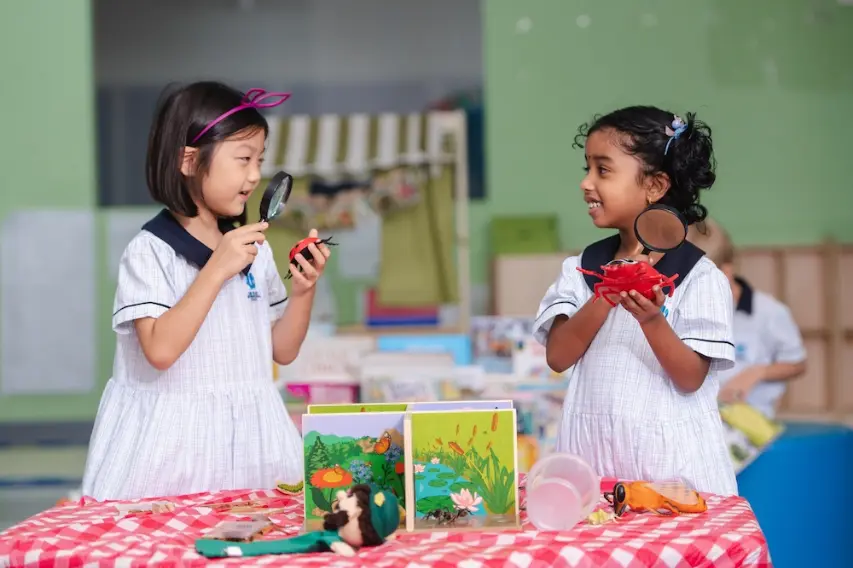
- Follow their lead: If your child is suddenly obsessed with bugs, roll with it. Count ants on the sidewalk, draw beetles together, or build a tiny bug house.
- Unplug together: Swap screen time for hands-on, interactive play whenever possible. Take a walk together in a park, colour in some pictures or even act out a favourite story-time scene. This helps build imagination as well as showing your little ones that there are other ways to be engaged.
Play-based learning does far more than keep young minds busy; it honors the way children naturally discover, make sense of, and connect with the world around them. By creating spaces in both school and at home, curiosity will lead and exploration will take centre stage, thus giving children the freedom to build not only essential developmental skills, but a genuine, lifelong love of learning.